Thursday, 12 May 2016

WE ARE EATING OUR FUTURE, DISGUSTING, ISN’T IT?


What’s the need of a fine house if you don’t have a tolerable environment to put on it? Henry David Thoreau. A nation that destroys it soils destroys itself. Forests are the lungs of our land, purifying the air and giving fresh breath to our people without any discrimination, to it we are all equal.


The name of our present society’s connection to the earth is “bad work” – work that is only generally and crudely defined, that enacts a dependence that is ill understood, that enacts no affection and gives no honour. Every one of us is to some extent guilty of this bad work. This guilt does not mean that we must indulge in a lot of breast-beating and confession; it means only that there is much good work to be done by every one of us and that we must begin to do it.

 None of us is happy to be associated with bad slog. Doing good work on our environment does not involve any hard task/labour; it’s all about doing that one ‘little thing’ every day. Something that won’t consume so much of our time, but it’s something that we will one day look back on it and be proud of ourselves. When we connect with nature we will restore ourselves, and that connection depends on each one of us individually.

To waste, to destroy our natural resources, to skin and exhaust the land instead of using it to increase its usefulness, will result in undermining the future of our children. Why don’t we create that serene environment to them? They also have a right to, clean air, pure water and to the preservation of natural scenic, historic and aesthetic values of the environment. Let’s not just protect the environment but let’s create a world where the environment doesn’t need to be protected for the generations to come.

Talking of the ‘tembea Kenya’ programme, we all feel good travelling around Kenya to see all that there is in our beautiful game reserves and national parks. To see the entire heritage, enjoying every beauty that is in there. If we really love our children why can’t we preserve the same for them? Let’s make their future life as good as our fathers and mothers made ours.

The amount of destruction we are doing to our planet is inexcusable. Being in the shoes of Mother Nature I will never forgive humans for the multi destructions they have imposed on me. But she has the heart of a mother, so kind and easy to forgive. Why can’t we take advantage of that and give back what we took from her. We’ve been residents here for a blink of an eye. If we're gone tomorrow, will they miss us?


 Article by

Phyllis Tajeu
Email: ptajeu@scopeintervention.org

Tuesday, 22 March 2016

Water crisis in Kenya

43 % of Kenyan population does not have access to clean water. For a long time, water scarcity has been a major issue in Kenya, caused mainly by long persistent droughts, forest degradation, floods, poor management of water supply, contamination of the available water (especially in slums), and a sharp increase in water demand resulting from relatively high population growth.

One main reason why droughts are recurring in Kenya is deforestation. The largest forest in Kenya, Mau, distributes water to six lakes plus eight wildlife reserves, and some 10 million people depend on its rivers for a living. However, loggers and farmers have destroyed a quarter of Mau’s 400,000 hectares. The problem with deforestation is that it almost always leads to increased run-off, which has negative implications in both the rainy as well as the subsequent dry season.

For many years there has been an increased need for funding, management and development of water resources in Kenya because of the increasing population as well as the country’s increasing use of water for agriculture. However, Kenya’s water resources have been mismanaged through unsustainable water and land use policies, laws and institutions, weak water allocation practices, growing pollution, and increasing degradation of rivers, lakes, wetlands, aquifers and their catchments.


The disability to maintain clean water in Kenya is another main reason for the worsening of the water crisis in the country. Many Kenyans use wells to obtain domestic water and also use pit latrines that are often close in distance to the wells. This causes contamination of the wells because the micro-organisms travel from the pit latrines to the wells. 

While at the global level about 1 billion people are locked out of having access to safe water due to poverty, inequality and government failure, it is also clear that not having access to clean water is a main driver of poverty and inequality. In Kenya, largely due to recurrent droughts, millions of families that rely on crops and livestock are threatened and thousands of people die each year as a result of thirst and hunger. According to the World Bank (2010), the mortality rates of adult males, adult females, children under five, and infants has increased from 1990 to 2008. In Kenya, the water crisis has severely affected millions of lives in many ways as contaminated water resources are extremely unhealthy and typically result in multiple illnesses.

To address the above and many other challenges, the Kenyan government has made some progress in addressing water crisis in the country. One of such significant steps is the establishment of water ministry to promote and support integrated water resource management to enhance water availability and accessibility. Some of the key targets of the ministry are to: accelerate the implementation of water sector reforms; improve the sustainable management of water resources; improve the provision of water and sewerage services; improve the utilization of land through irrigation; mobilize resources and improve the management and access to water resources information.

Despite the progress made, especially by the devolved units of the government and the central government, it is be important to raise awareness among the Kenyan population, encourage investments from the private sector in water and also promote actions by citizen and local communities in promoting access to clean and safe water.

Article written by
Kenfrey Katui
Founder and Executive Director-Scope Intervention 
Email: kenfrey.katui@scopeintervention.org


Wednesday, 27 May 2015

What’s holding you back?

What’s holding you back? Dear Friend, You know how grave a threat the climate crisis is -- not just today, but also to the future of human civilization on this planet we will pass on to our children and grandchildren. You know that it’s up to us to protect a climate balance that supports and nurtures a healthy and prosperous future for the generations that will follow us. The good news is that we can -- but only if we take urgent action. That’s why I’m writing to invite you Scope Intervention and be part of extraordinary group of citizens who are committed to solving the climate crisis, now and forever. By being part of us, you will be empowered to communicate the reality of the climate crisis, inspire your local community and help to confront the greatest challenge humanity has ever faced. With so much on the line for our planet and with your chance to help solve the challenge of our time right in front of you, I’ve got just one question. What’s holding you back? Sincerely Scope Intervention team

Thursday, 14 May 2015

Lets Do something

The recent flooding of Nairobi had twitter coming up with all sorts of funny pictures and tweets... and that’s ok because we (Kenyans) come out as strong people who through bad times can still get to laugh.
Good for us, we are a happy country.  At the same time we want to blame Governor Kidero for controlling rain and it is his fault that he let there be too much down pour while he had not unclogged the drainage system in Nairobi.  Whenever a natural disaster strikes we want to blame someone for not doing something.  We have heard time and time again of global warming and climate change, it’s like a song that we have not yet internalized as a Nation.

Lake Nakuru with no Flamingos.. The salty water lake just turned in to a fresh water lake .
The rains that are destroying, house furniture, businesses and cars... Climate change people...Climate change. When will we do something about it? Does it have to be until it personally affects for you to want to do something about it then? The Late Professor Wangari Maathai fought so hard for us to be able to live in a better environment.  I don’t have to point out everything that she had for us and the earth you all know, you all read it and had her speak about it. Then why aren’t we doing as she did and more so that our children and children’s children can live in a habitable world?

We are wasting a lot of time yapping about other issues that will be inconsequential in the long run after various other natural disasters strike. What is the ministry doing about this? I think that more money should be poured into environmental conservation for two reasons. One... Climate change is happening and so the wildlife and the panoramic scenery that we are boasting about will not be present for the said tourist to pay top dollar to come see. Two… Resources are getting scarce due to climate change and people’s way of living is bordering desperation…and that’s a breeding ground for a very bad and selfish people.
The sooner we each give a **** to the climatic changes happenings and do something about it the better of we will be later then everybody can go back to their greed and selfish driven ambitions. Can we all agree to do something geared towards environmental conservation???????

Gladys Cheruiyot
Communications and Advocacy Officer
Scope Intervention Organization

Wednesday, 10 December 2014

GAS MASKS FROM BIRTH TILL DEATH…???

Clean water and fresh air are free gifts to us from nature. Trees that surround us purify the air we breathe despite the tones of poisonous gases we release annually .What we don’t know  is that as we cut these trees  the more the gas will increase and it may reach a time we have  to wear gas masks  24/7. Imagine that for a minute…wont you miss just being free and breathing fresh air.??? Being forced to carry an oxygen tank like a school bag; won’t that be just tiresome? 


Well as we enjoy breathing fresh air there is a small island located in southeast china called Miyakejima, where residents wear gas masks even during wedding ceremonies .It’s not some form of fashion but as a result of volcanic eruptions that took place back in 2000.The island people before 2000 had already adapted to recurrent volcanic eruption but in 2000 the worst happened. This volcanic eruption caused poisonous gases to leak from earth that forced the 3600 island residents to evacuate, but the citizens won’t stay away.

Surprisingly after this eruption was followed by 17,500 earthquakes which hit the island between June 26th and July 21st. During this eruptions and earth quakes, Miyakejima was enveloped in ash plumes reaching 10 miles in height, pyroclastic flow (fast flow of superheated gas), and heavy ash fall alongside crater collapses. This disaster also led to high levels of toxic sulfur dioxide regularly leaking up through the ground making 20% of the land uninhabitable. 

Sulfur dioxide at high concentration affects lung function, worsens asthma attacks and aggravates heart diseases' in sensitive groups. Three months after the disaster the government took action and forced a mass evacuation in September. For five years, Miyakejima was declared off limits. The island was left with dead trees, rusted cars, and abandoned buildings. Slowly the evacuation order was lifted and in 2005 residents were allowed to return to their homes. Others preferred to remain in Tokyo but surprisingly 2,800 chose to return, but had to adopt wearing gas masks and dangerous gases seeping through the air. 

Despite all these gas tourism is leading in the area, with tourist purchasing gas masks from ferry stations. Due to the eruption there is a great view from sightseeing, from a boned houses, crushed cars and areas that erupted. The lives of these island people are forever tied to wearing gas mask and protective gears but not by choice but circumstances. Our current status where really don’t really give that much to climate change and combating its effects might lead to one day  all of us living the same life style with no alternative. Before we reach there let’s keep planting trees…it’s that simple!!!!!!

Author: Angela Keter (Advocacy and Communication Officer-Scope Intervention)
Email: kangela@scopeintervention.org

Saturday, 29 November 2014

10 Most beautiful places on earth we must conserve

Here is a list of 10 most beautiful places on earth that you should visit.

10. Bamboo Forest, Japan

9. Geiranger Fjord, Norway

8. Nairobi National Park

7. Iguazu Falls, Argentina/Brasil


6. Moraine Lake, Canada

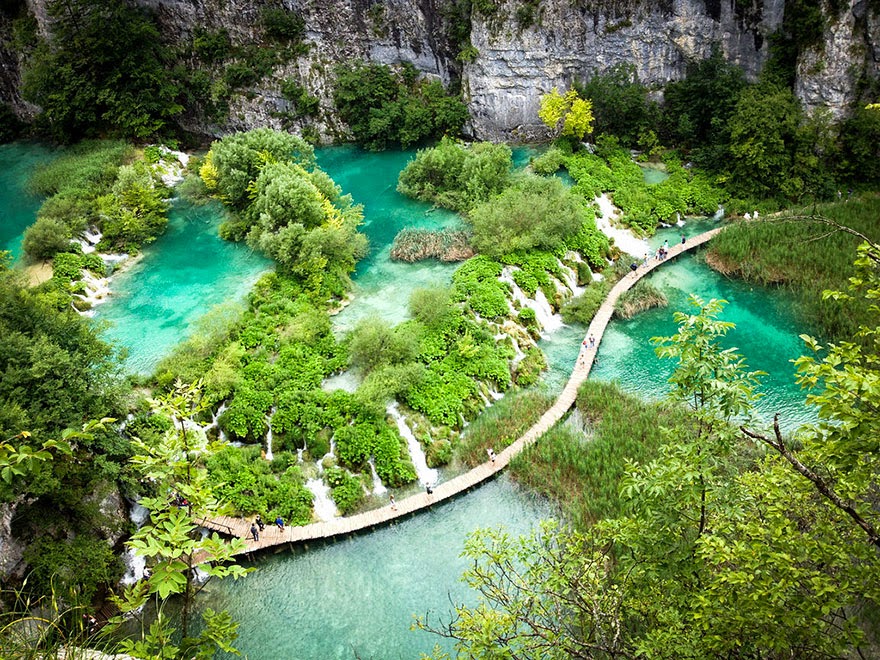
5. Plitvice Lakes, Croatia


4. Victorial Falls Zimbabwe/Zambia

3. Tianzi Mountains, China

2. Maasai Mara National Researve

1. Rice Terrace Fields in Mu Cang Chai, Vietnam


Wednesday, 26 November 2014

Abuse on Environment is abuse on women

Abusing the environment is like abusing the African woman just as striping a woman is gender abuse. There is more to gender abuse than we are aware of. Some of this gender abuses have passed on like normal activities to us and we never realize a specific gender is being abused by them. Believe it or not degradation of the environment and the effects of climate change largely affect the women in our society.

In a UN meeting held in New York Phumzile Mlambo-Ngcuka the Executive Director of the United Nations Agency dedicated to gender equality and the empowerment of women said “women are on the frontlines, bearing the brunt of climate change”. She noted that women and children are 14 times more vulnerable than men in climate change related natural disasters, such as floods and droughts. 
According to researcher’s women are the ones who will be affected mostly by climate change in different parts of their life cycle especially during child bearing from the fetus to the growing of the child. The survival of women and children mainly depend on the natural resources that are available.

“In Kenya women are the first victims of environmental degradation, because they are the ones who walk for hours looking for water, who fetch firewood, who provide food for their families.”Wangari Maathai .

Most the time in Kenya men leave their women in their rural homes to go and work in urban areas .These women left at home have to go to their farms every morning and take care of our their livestock .
The current climate changes has led to unpredicted weather patterns, floods and drought .Our women are left to deal this effects. They are the ones who have to wake up early in the morning to walk for miles to look for water and firewood. While we pollute our rivers our women have the responsibility to wash clothes, cook food and bathe their children. They are the ones who mostly go to these rivers to fetch water. They are the ones who will be directly affected by the chemicals in this water .While trees are being cut deforestation is taking place leading to drying up of rivers and scarcity of firewood .
Our women are the ones after all this who have to walk for miles looking for this necessities .These women are our mothers, sisters, daughters and wives. Despite their daily efforts to ensure our children are clean, well fed and in school things we do largely affect them and go unnoticed. Women bring us up and ensure we get the best they can afford, they spend nine months of their lives carrying each child, the rest of their lives are spent raising us but we never appreciate these efforts. For each tree that is being cut a woman has to walk further for firewood, as we pollute our rivers our women have to walk further to find different sources of water. As we sit in our comfort zones enjoying money from selling timber a woman out there is walking for miles looking for a river that is not dried up.


Author: Angela Keter (The author is a communication and advocacy officer at Scope Intervention)
Email: kangela@scopeintervention.org


Tuesday, 25 November 2014

5 simple reasons why we should take care of our trees

At the very beginning of our human experience, trees were considered sacred and honorable: oaks were worshiped by the European Druids, redwoods a part of American Indian ritual, baobabs a part of African tribal life, to the Chinese the ginkgo link and monkey puzzles to the Chilean Pehuenche. Romans and scholars during the middle Ages venerated trees in their literature.

The trees around us are extremely important and have always been necessary for improving the human condition - both during its life and after harvest. It is not a stretch to believe that without trees we humans would not exist on this beautiful planet. In fact, some claim can be made that our mother's and father's ancestors climbed trees - another debate for another site.
The modern human community has other, more practical reasons to admire and honor trees. Here are some of the reasons why trees are necessary for improving our worldly condition. The list might not be exhaustive but the message will remain, trees are important.

          1.   Trees are food
We all gather our nutritional products from trees including fruits, nuts, seeds, leaves, bark and even sap. Tree products have been an important part of diets for thousands of years, from early humans gathering fruits and nuts to the first cultivation of plants and animals.

2.           Trees Produce Oxygen
We all need this to live. A mature leafy tree produces as much oxygen in a season as 10 people inhale in a year. What we also don't realize is that trees that clean the air we breathe.


3.           Trees Clean the Soil
Trees filter sewage and farm chemicals, reduce the effects of animal wastes, clean roadside spills and clean water runoff into streams. Trees absorb dangerous chemicals and other pollutants that may have entered the soil. Trees can either store harmful pollutants or actually change the pollutant into less harmful forms.

4.           Trees Stores Carbon “Sinks”

To produce its food, a tree absorbs and locks away carbon dioxide in the wood, roots and leaves. Carbon dioxide is one of the greenhouse gasses causing global warming. A forest is a carbon storage area or a "sink" that can lock up as much carbon as it produces. This locking-up process "stores" carbon as wood and not as an available "greenhouse" gas.

5.            Trees are medicine


An estimated 50,000 plant species are used medicinally.  Medicine from trees, extracted from the wood, bark, roots, leaves, flowers, fruits or seeds is fundamental to the well-being of millions of people. Where access to modern pharmaceuticals is limited, trees offer living pharmacies open to anyone with traditional knowledge on their medicinal properties.


My name is Kenfrey Kipchumba Katui and I am the Founder and the Executive Director of Scope Intervention.  Write to me via director@scopeintervention.org

Thursday, 20 November 2014

It's my duty, it's your duty

 Every person in Kenya is entitled to a clean and healthy environment and has the duty to safeguard and enhance the environment. I often see on TV residents in certain areas complaining of dumpsites being close to their homes, sewage burst obviously caused by blockage from probably plastics which have been disposed by the residents themselves and many other environmental hazards that they offload to the government.

We Kenyans tend to point fingers at others while we are the same people responsible for what has happened,   when it comes to thieves all Kenyans are the first to stone the culprit because they feel the loss of their property even though it’s not the same thief that probably stole it. A politician clears a forest that should be there and the residents are first to cheer. You are being mind played by politicians so that they can grab the resources to enrich themselves at the expense of your environment. We just sit and let them do it and does nothing History has taught us that failure to understand and appreciate the value of the nature has led to the downfall of civilization. We are here trying to fight for our rights and the main right here the core right here is our environment.  Why aren’t we fighting to preserve it? Everybody wants more, but what happens when you get more and floods hit and you lose all? What happens when you get more and the air is too toxic and water is contaminated that the more won’t help you at all? Have you sat down and thought of what the future holds when we have finished all our forests, we are drowning in garbage and the air is to toxic for use to breathe????
When you have done your part and contributed to environment conservation, look for more, because then you have a place to enjoy your more. Plant a tree, dump your waste properly and where you can try not to contribute to any kind of pollution because as I stated it is our environment not just my environment. Professor Wangari Mathai had her hair ripped of her head and she was whipped because she wanted me, you and our children to have clean air, good water and a sustainable place to live in. She did that for you and yet she doesn’t know you on a personal level. So it’s not about what’s going to help you alone, its for the betterment of humanity. This is my plea to all of you.

Author: Gladys Cheruiyot (Communication and Advocacy Officer-Scope Intervention)

Email: cheruiyotg@scopeintervention.org  

Wednesday, 19 November 2014

The real Social and Environmental Injustice

Yesterday, Angela wrote something that kept me thinking in her blog. Her last paragraph read, “Our land will be used to plant trees for damage control; to absorb waste from our big brothers and sisters and not for other development activities. Really??? That’s Environmental and social injustice to me!”


She was referring to the idea behind REDD+ but what came into my mind was beyond the current standoff in balancing economic development and conserving our planet. The saying, ‘we did not inherit earth from our parents but we borrowed it from our children’ came into my mind.

Which is the bigger evil? Which one is the ‘real’ injustice? The developed world paying us to keep trees in our farms so that we can absorb the excess waste from their industries in the expense of our other economic activities or us (the current generation) depleting, defecating and destroying land which rightfully belongs to our children?


Our fathers thought about us when they planted a tree. They knew we would need a shade. They thought about us when they conserved a river. They knew we would get thirsty and need some clean water to quench the craving. The late Prof. Wangare Maathai thought about us when she fought against erecting a sixty story skyscraper worth $200 million in Nairobi’s Uhuru Park. She knew a city philosopher would need grass and shade to sit under in the middle of his busy schedule inside the concrete.  She urged us to do something little that can make a difference. The little things she did were planting trees. Prof knew her daughter would grow up and she would need some firewood to cook for her family.

 Another great African woman Graca Machel asked, “Can we genuinely say we are going to preserve their lives, and ensure their children and grandchildren and great-grandchildren inherit a planet which is safe and sustainable?

Our fathers and mothers thought about us, but are we really thinking about ourselves? Are we thinking about our children? How about our grandchildren? President Obama once said that we cannot condemn our children and their children to a future that is beyond their capacity to repair. He said that they will look at us straight in the eye and ask if we did all that we could when we could to leave them a safe and sustainable world.

As a 90s kid, I had the privilege of drinking water straight from the river. Less than two decades later, I cannot recommend my son to drink treated water straight from the tap. My generation has defined the fate of my children and generations to come. We are already bottling water because river and tap water is unsafe. Half a liter of water is more expensive than a plate of fries.  We are raising our children inside a concrete wall. Our progeny know nothing about the shade their grandpa and grandma left them; we converted it into some few coins and boasted our economic prosperity. 
Those whom the world has entrusted with leadership have been talking and pledging during the day but killing carbon tax and destroying renewable energy sector at night. They carry on about not hurting their economies.

 Despite our ability to innovate and take technology to a new level, we still can’t figure out which is the safest and more sustainable source of energy. Let’s just say investing in wind and solar is more expensive than investing in petroleum. We would rather keep the status quo that destroys the only life supporting system available to mankind.

To me, I will follow what my mentor Prof. Wangare Maathai did. I will play my part and do the little things that can make a difference. I will plant a tree; I will motivate my son and wife to plant a tree each.  We may not grow a forest, but my grandchildren will say, “At least daddy and granny saved us from the worst social and environmental injustice to humanity”.

Author: Kenfrey Kipchumba Katui (Founder and the Execute Director of Scope Intervention)


Tuesday, 18 November 2014

Environmental and Social Injustice


As we continue developing we contribute to the amount of carbon already in the atmosphere, but as we develop there are countries that have already developed and are majorly contributing to the increase of carbon dioxide in the air .Various laws and have been set to try to control this pollution. According to the Kyoto protocol each country must submit its total annual emissions. In 2010 the world total emission was 33615389 tones.
COUNTRY
EMISSION PER CAPITA (t)
ANNUAL CO2 EMISSION S (kt)
%  OF WORLDS TOTAL
China
6.195
8286892
24.65%
United states
17.564
5433057
16.16%
Kenya
0.304
12427
0.04%
Rwanda
0.055
594
0%
Nigeria
0.0494
78910
0.23%
Somali
0.063
609
0%

United States and china are the major contributors of emission in the world .In 2010 only china and the United States contributed to 40.81% of the world’s total emission whereas countries like Rwanda and Somali contributed almost zero percent of the world’s total emission .In the table above Rwanda was the least contributor to the world’s total emissions whereas china was the major contributor. In 2010 Rwanda was experiencing  the impact of climate change in their economic development .It  experienced heavy rains which led to loss lives, destruction of infrastructure like roads and erosion of farms .In the same year 3,934 houses were demolished mostly by heavy rains , floods and landslides. Over 2,201 hectares of land were also devastated by the same disasters. This was due to the unpredicted weather patterns leading to unexpected weather changes. In the same year china recorded a 10.3% increase in the growth of their economy coming mainly from the manufacturing industries that emit this green house. 
Though china signed the Kyoto protocol, it is ratified and is a non annex I country which is not required to limit greenhouse gas emission under the terms of an agreement. China can emit as gasses to the atmosphere without limit but the gasses won’t stand above china but it will settle in the atmosphere and affect every country whether you contribute 0% or 20% we will both face the consequences of this emission .So far developing countries like those in Africa are being urged to plant trees and maintain the forest through a UN REDD+ concept (reducing emissions from deforestation and forest degradation). This ensures the reduction of emission of greenhouse gases by through enhanced forest management in developing countries. This means developed countries pay developing countries to plant trees as they continue emitting these gases. In this, Africa is a mitigating site for climate change. Despite this it’s not really fair for African countries to suffer the consequences of developed countries .As they continue developing as Africa we continue facing floods, landslides, unpredictated weather patterns and drought .
Our land will be used to plant trees for damage control; to absorb waste from our big brothers and sisters and not for other development activities. Really??? That’s Environmental and social injustice to me!


Author: Angela Keter (The author is a communication and advocacy officer at Scope Intervention)
Email: kangela@scopeintervention.org